Ten Areas of Analysis
Our Ten Areas of Analysis
360 Political Ecology (360PE) examines environmental and development challenges through ten interconnected thematic areas. Every 360PE Review article addresses at least one area, and many examine several.
Climate change: mitigation, adaptation and resilience
Climate risks, emissions reduction, adaptation decisions and the resilience of societies and ecosystems.
Energy and resource economics
Energy access, resource allocation, markets, economic incentives and development outcomes.
Critical minerals and energy transitions
Mineral supply chains, industrial policy, technological change and the distribution of transition benefits and costs.
Environmental justice and health
Unequal exposure, public health, community participation and the fairness of environmental decisions.
Environmental governance and political economy
Institutions, public policy, power, incentives, accountability and contested resource decisions.
Biodiversity and ecosystems
Ecosystem change, conservation, ecological services and the relationships between biodiversity and livelihoods.
Sustainability and sustainable development
Long-term development pathways and trade-offs among economic, social and ecological objectives.
Climate finance
Climate-related investment, financial mechanisms, funding access, risk allocation and accountability.
Just Transition
Fairness for workers, communities and vulnerable groups during decarbonization and economic restructuring.
Regional and international environmental policy, law, treaties and declarations
Environmental agreements, regional cooperation, legal frameworks and cross-border implementation challenges.
Our guiding principles: Evidence · Ecology · Equity · Development
The ten areas describe what 360PE studies. These four principles guide how 360PE approaches analysis and public communication.
The 360PE analytical framework
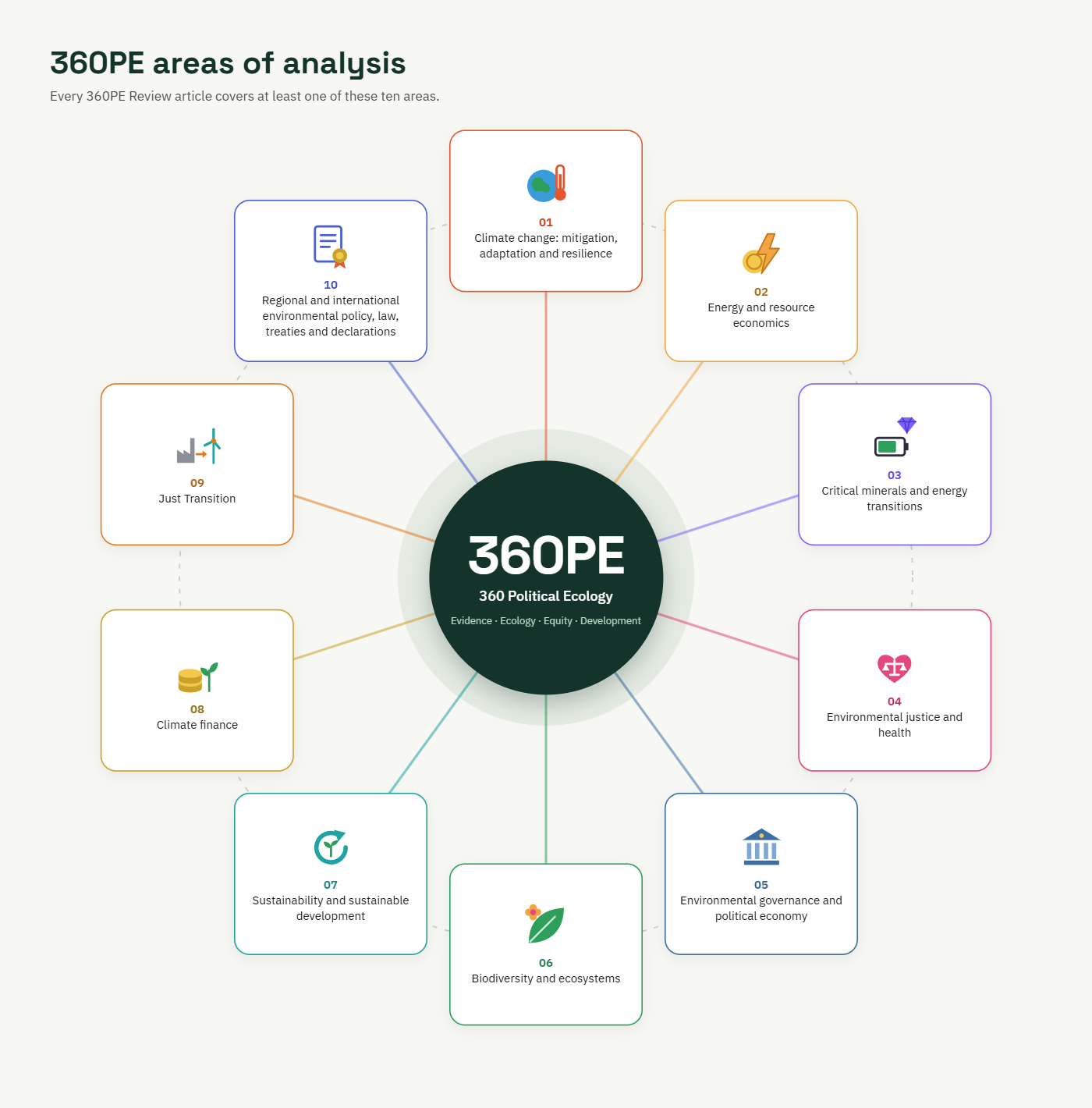
Figure 1. The ten thematic areas of analysis of 360 Political Ecology (360PE).
Note. This conceptual diagram illustrates thematic membership in 360PE’s analytical framework. Connecting lines do not indicate causal or empirically measured relationships. Each 360PE Review article addresses at least one of the ten areas. Source: 360 Political Ecology (2026), original framework.